
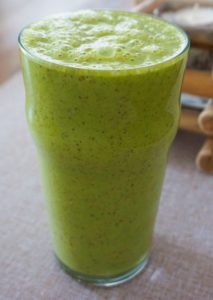
Green Smoothie
Hydration has become a concern as temperatures rise. Summers are now unusually hot, compared to previous years. Even in places where temperatures used to remain cool enough to live without AC in the summer (France, the Czech Republic, Germany) are now experiencing record high temperatures. If you’re like me, the taste of plain water just doesn’t cut it. You may add cucumber, lemon, mint, and other fruit to improve the taste, but you probably won’t drink enough to keep up with your fluid needs.
Importance of Hydration
Our bodies need water to carry out many demanding and vital metabolic functions, such as detoxification, blood volume, kidney and liver function, digestion, cellular respiration, just to name a few. If your fluid intake is too low, you may experience serious, debilitating symptoms, such as severe headaches or constipation. But due to the body’s high adaptability and coping mechanisms, if dehydration goes too long unchecked, you may not feel any symptoms until months or years after the fact. If you drink alcohol, you probably have experienced symptoms of dehydration already: dizziness, thirst in the middle of the night, confusion, and headaches.
“Clinically, dehydration presents with symptoms ranging from mild thirst and fatigue to severe complications such as confusion, hypotension, and multiple organ dysfunction.” (1)
Benefits of Hydration
- Brain Function. The brain needs water to synthesize hormones and neurotransmitters. Dehydration can affect mood, ability to concentrate and synthesize information, short-term memory, and reflexes. Since water is not stored in the body, it’s important to drink daily.
- Blood Flow. Blood needs water to move nutrients and oxygen; without enough water, the blood thickens and the flow of nutrients and oxygen to cells, including the brain, is impaired. This thick blood (glue-like consistency under extreme dehydration) makes the heart pump harder to push the blood into the arteries.
- Digestion. The digestive system needs water to churn food, process fiber, and absorb nutrients. Dehydration can interfere with these functions and induce constipation, gas, and bloating.
- Kidney Function. Lack of water slows down the kidneys and oxalates and minerals can accumulate in the kidney tubules and form into stones. Water helps dilute these products and excrete them safely out of the body.
- Urinary Tract. Drinking plenty of water increases urination, which flushes out bacteria from the urinary tract and keeps the urethra clean and lessens the occurrence of UTI (urinary tract infection).
- Detoxification. The liver needs water to break down protein, medication, and any toxic compounds through many enzymatic processes. Without water, this system becomes defective and will lead to headaches, unexplained pain throughout the body, and bad breath.
Dehydration Symptoms
Unfortunately, thirst is not the only sign of dehydration. Many people, particularly the elderly, don’t get a sense of thirst even when dehydrated. So, here are the signs you may watch out for throughout the day, when exercising, or during the hot summer days.
- If you don’t sweat, even after a workout
- When your urine is dark brown and emits a pungent odor
- Dry skin, even during nice weather or humidity
- Leg cramps when or after exercise
- Headaches that don’t resolve with medication. Dehydration headaches are debilitating. It feels like a hammer is pounding on your temples.
- Dry or pasty mouth (thick saliva)
How to Avoid Dehydration
The answer is always to drink water. But it’s not that simple. Water doesn’t taste good to everyone. It’s recommended that women drink about 11 cups of water and 15 for men. But if you can drink 6 to 8 cups a day, you will be in better shape; you may get a little more from food and other beverages (tea, smoothies, juices, fruit, soups). So, aim for the moon and be pleased with any distance you achieve.
I hope the tips below will help you get more fluids into your body.
- Drink smoothies that include dark leafy greens, water, and low-sugar fruit such as berries, kiwi, apples, and fresh pineapple. Technically, pineapple is not a low-sugar fruit, but it’s very high in magnesium and vitamin C; so, it’s fine to indulge.
- Kombucha is hydrating and includes probiotics
- Mix fizzy water with flat water
- Add any of the following to flavor your water: lemon, lime, cucumber, fresh basil, mint
- Enjoy homemade popsicles with a little fruit juice
- Snack on watermelon. It’s low in sugar and is composed mainly of water, hence the name
Smoothie Recipe
- 1 English cucumber, chopped (not peeled)
- 2 ripe kiwis
- 1/2 cup loosely packed mint leaves
- 1 tablespoon agave nectar or sugar
- 1 cup fizzy water such as San Pellegreno or Kombucha
- Dash of salt
Place chopped cucumber in a blender, add water, sweetener, kiwis, salt, and top with mint leaves. Blend until smooth. If the texture is heavy, add a little bit of water and stir. If you don’t have a Vitamix the texture will be grainy. In that case, use less water and eat it with a spoon like gazpacho.
Need more recipes? Drop me a line. Better yet, would you like to be one of my recipe testers? I create new recipes all the time and I have a team of people who test them to ensure they taste good, have the right consistency, and assess the level of difficulty. Join us!
Citations:
1. https://www.ncbi.nlm.nih.gov/books/NBK555956/